

About the entrance examination
Special oral examination for master courseOrientation for the entrance examinationGuide for entrance examinations / Required files (Guide for entrance examination, Summary of your desired master/doctor thesis project and Grade summary sheet)Information about exam subjectsEntrance Examination FAQFor those aiming for EEIS
Testimonials of StudentsCareer paths and Ph.D.Financial support for graduate students
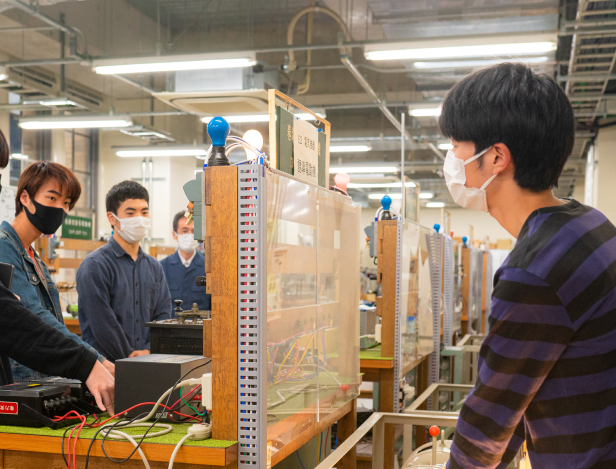
Discover the Future through
Electrical Engineering and Information Systems
Humanity has continued to prosper by skillfully manipulating
the real world of physics and the abstract world of
information while going back and forth between these two worlds.
By inventing language, we abstracted information and succeeded
in recording and communicating it using physics
such as words and characters.
In today's world where everything is connected to the Internet
and processed by artificial intelligence, not only
information technology, but also the physical technology that
supports it is changing our society with tremendous power.
In the Department of Electrical Engineering and Information
Systems, we aim to master both physics and information,
and bring innovation to everything from nanodevices to space.
Department of Electrical Engineering and Information Systems (EEIS)
Department of Electrical Engineering and Information Systems
EEIS research field
EEIS has eight fields, and research is conducted at the Hongo Campus, Komaba Research Campus, Kashiwa Campus, and Sagamihara Campus.
In every field, our mission is to open up the future with advanced technology and tackle important global issues.
EEIS has inherited the history and tradition of being the first university department in the world to specialize in electrical engineering (1873) and is responsible for the core fields of engineering, and values the frontier spirit that has always created new concepts and cutting-edge technologies that open up new eras.
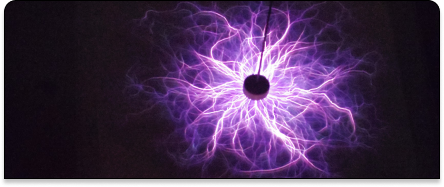
 Environment and energy
This is a research field that targets physical devices and equipment systems in other areas related to environmental energy.
Energy engineeringDesign and evaluation of sustainable and environmental conscious systemNanostructural physicsPlasma sciencePlasma electronicsApplied materialsNuclear fusion studiesOptical engineering, Photon scienceElectronic materials/Electric materialsPower engineering/Power conversion/Electric machinery
See faculty members in this field
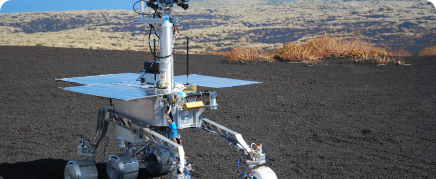
 System control and space
This research field is related to robots, railways, automobiles, and space. Electronic engineering and control technology are core technologies in this field.
Dynamics/ControlMeasurement engineeringAerospace engineeringControl engineering/System engineeringIntelligent mechanics/Mechanical systemsElectronic materials/Electric materialsPower engineering/Power conversion/Electric machinery
See faculty members in this field

 Nano physics and devices
This field is divided into Hongo and Komaba, and researches the area where electronics and physics intersect.
Electron device/Electronic equipmentElectronic materials/Electric materialsNanostructural physicsThin film/Surface and interfacial physical properties Applied materialsOptical engineering, Photon scienceNanomaterials engineeringCommunication/Network engineeringBiomedical engineering/Biomaterial science and engineeringNano/Microsystems
See faculty members in this field
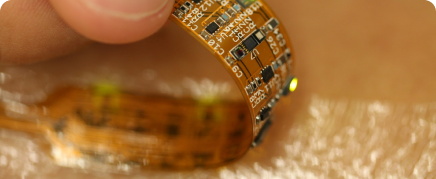
 Biotechnology and complex systems
A unique research field that aims to construct a new research paradigm through the fusion of bioscience and engineering.
Mathematical informaticsSoft computingLife/Health/Medical informaticsThin film/Surface and interfacial physical properties Optical engineering, Photon scienceElectronic materials/Electric materialsElectron device/Electronic equipmentKansei informaticsBiomedical engineering/Biomaterial science and engineeringMedical system
See faculty members in this field

 Media, intelligence, and computation
In this field, research studies on information science and high-performance computers are conducted. This field also explores the relationship between information technology and humans.
Computer systemSoftwareLearning support systemKansei informaticsHigh performance computingInformation securityPerceptual information processingIntelligent roboticsIntelligent informaticsCognitive science
See faculty members in this field
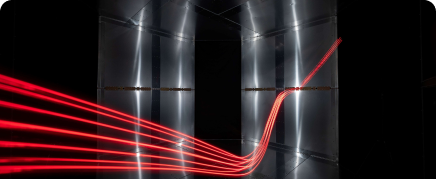
 Ubiquitous information environment
This field widely covers network infrastructures that support the next-generation society.
Web informatics, Service informaticsComputer systemHigh performance computingInformation securityInformation networkPerceptual information processingIntelligent informaticsCommunication/Network engineering
See faculty members in this field
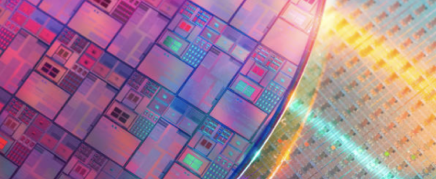
 Semiconductor systems
This field researches high-performance computing technology and software technology mainly using semiconductor integrated circuit technology.
Energy engineeringComputer systemNanobioscienceHigh performance computingInformation securityControl engineering/System engineeringPerceptual information processingIntelligent informaticsCommunication/Network engineeringElectron device/Electronic equipment
See faculty members in this field
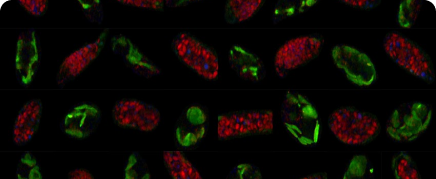
 Photonics and wireless
In this field, research on measurement sensing communication systems using light and radio waves is conducted.
Soft computingMeasurement engineeringOptical engineering, Photon scienceIntelligent informaticsCommunication/Network engineeringElectron device/Electronic equipmentNatural disaster/Disaster prevention science
See faculty members in this field

Message from the Chair
AI × Semiconductors × Energy Driving the Future
Department of Electrical Engineering and Information Systems at the Graduate School of Engineering, along with Departments of Information and Communication Engineering and Electrical and Electronic Engineering in the Faculty of Engineering at the University of Tokyo, has a long and distinguished history of over 150 years since its establishment in 1873. Throughout this history, our department has continuously addressed the evolving challenges of society and has been committed to creating new technologies that support and transform it. From the development of power infrastructure and communication technologies to innovations in electronic devices and advances in information processing, we have played a leading role across a wide range of fields, building the foundations of modern industry and society—an achievement of which we are deeply proud.
Today, we stand at a historic turning point, where rapid advances in AI are fundamentally transforming the structure of society. AI is permeating all aspects of life—industry, healthcare, education, and governance—bringing about sweeping changes and enabling the emergence of a “co-creative society” in which humans and AI collaborate. However, to make this transformation truly sustainable and effective, advances in information science alone are not sufficient. Innovation in hardware, particularly semiconductors, electronic devices, and photonic devices that form the foundation of AI, is indispensable. Advanced AI requires enormous computational resources supported by high-speed, energy-efficient processing platforms, and the integration with cutting-edge semiconductor technologies will be a critical factor in shaping the future.
Under the motto, “Master physics, and transform the information society. Master information, and transform the physical world,” our department has long promoted education and research that integrate software and hardware. This philosophy highlights the importance of combining a deep physical understanding of natural phenomena with the ability to process and utilize information through computation and communication. Through the advancement and integration of these two pillars, we aim not only to provide specialized knowledge but also to cultivate individuals who can bridge disciplines and create new value. This educational approach fosters the essential capabilities needed to build a future society with AI and serves as the foundation for nurturing leaders who will contribute to a co-creative society.
At the same time, the rapid progress of AI has brought new societal challenges. In particular, the sharp increase in electricity demand driven by the expansion and performance enhancement of data centers represents a critical issue for achieving a sustainable society. Supporting the AI-driven future will require not only advances in energy-efficient technologies but also broader efforts, including the adoption of renewable energy and the development of new energy infrastructures. Recently, novel concepts such as space-based data centers have been proposed, opening new possibilities through collaboration with space engineering. In our department, we are actively advancing research not only in power and energy technologies but also in advanced control systems that connect to space engineering, emphasizing interdisciplinary approaches.
By integrating the three foundational technologies—AI, semiconductors, and energy—we aim to proactively shape the coming co-creative society with AI. These fields are deeply interconnected, and their integrated understanding and application will drive the next wave of innovation. Our department will continue to foster highly skilled individuals with such comprehensive perspectives and to promote education and research that bring transformative change to society. Through the creation of new value, we are committed to contributing to the sustainable development of humanity and to a richer future for all.
Chair
Department of Electrical Engineering and Information Systems